
Our History
Children's Community Center was the first cooperative preschool to be founded in California and one of the first of its kind in the United States. Today, CCC is the longest continuously operating cooperative preschool. Come explore that history.

1926-1936
The Beginnings
Founding Vision - "An Art with the Dignity of a Profession"
The Children's Community of Berkeley, California, emerged from the educational aspirations of twenty progressive mothers who recognized a fundamental shift in American family life.
By the late 1920s, they observed that the transition from large families and simple community living to small families in complex urban environments had deprived their children of essential developmental experiences: the freedom of natural environments and the social education that comes from daily interaction with peer groups. Their solution was revolutionary - creating a cooperative school that would serve both children's educational needs and mothers' professional development as educators.
Led by Katherine Whiteside Taylor, these founding mothers had spent two years working together in the Child Study Section of the East Bay Branch of the American Association of University Women, which had been combined during the past year with the University Section Club, composed of professors' wives. Their collaboration in a stimulating parent discussion course led them to a crucial realization: the objective study of children was as essential to mothers' education as group association was to children's development.
The mothers envisioned a revolutionary solution that would recapture lost community values while incorporating modern scientific knowledge about child development. They sought to create leisure time not merely for its own sake, but to provide opportunities for developing motherhood into "an art with the dignity of a profession."
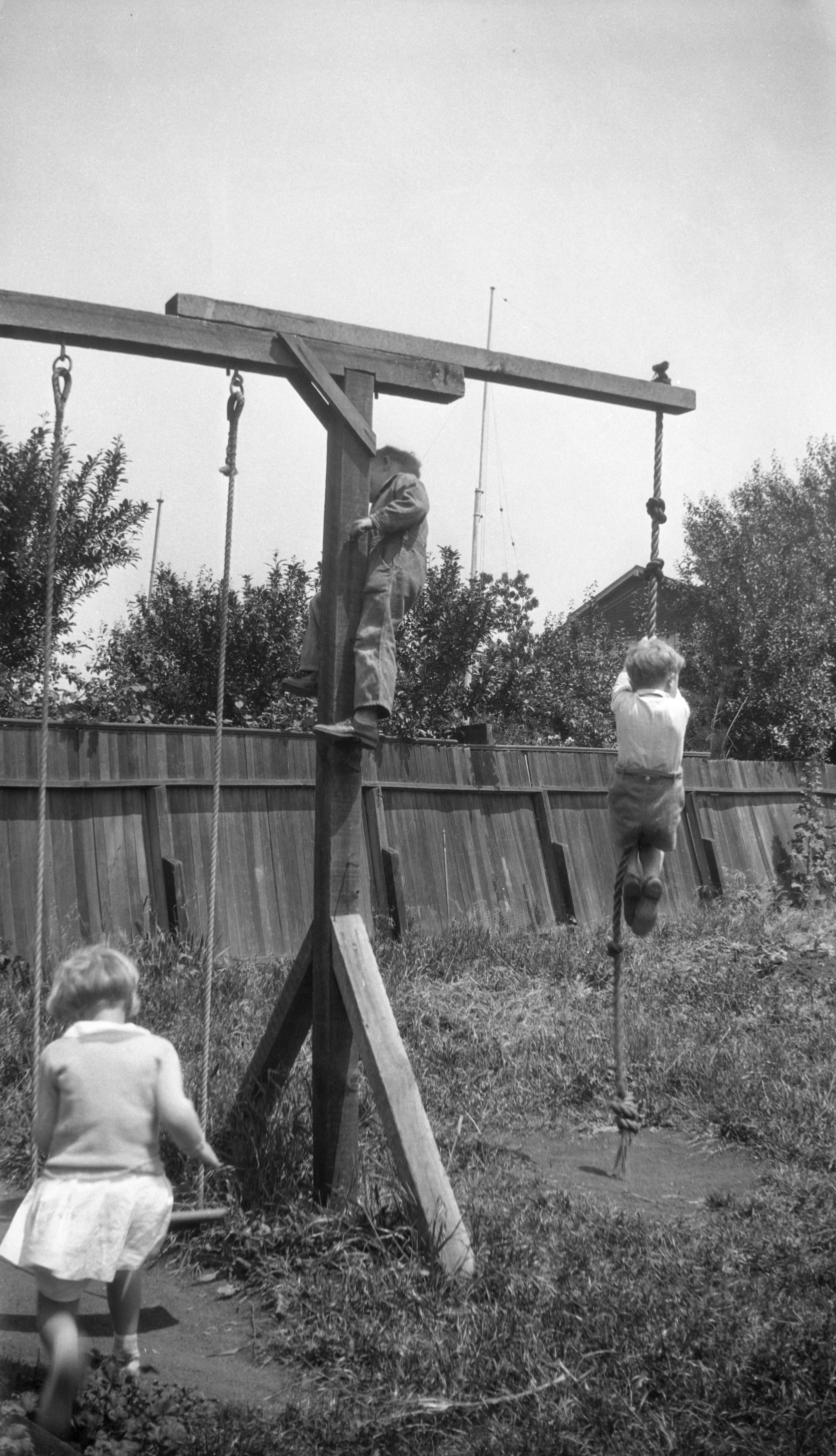
Establishing the School (1927)
Despite warnings about the expense of nursery schools and the difficulties of cooperation, the mothers pressed forward. Berkeley had no nursery schools at the time, and existing schools elsewhere did not permit the mother participation they considered essential. They concluded that cooperation was the only way to achieve their comprehensive vision for both children and mothers.
Recognizing their need for professional guidance, the mothers approached experts at the University of California and its Institute of Child Welfare. They secured an experienced nursery school supervisor through grants from the Scripps Foundation and the Institute of Child Welfare, which also provided modest salaries for staff. The Institute additionally furnished clerical help and a morning nurse to inspect children for infectious diseases. In return, the mothers agreed to provide children for research and serve as a social experiment in cooperative nursery school education directed and staffed by mothers.
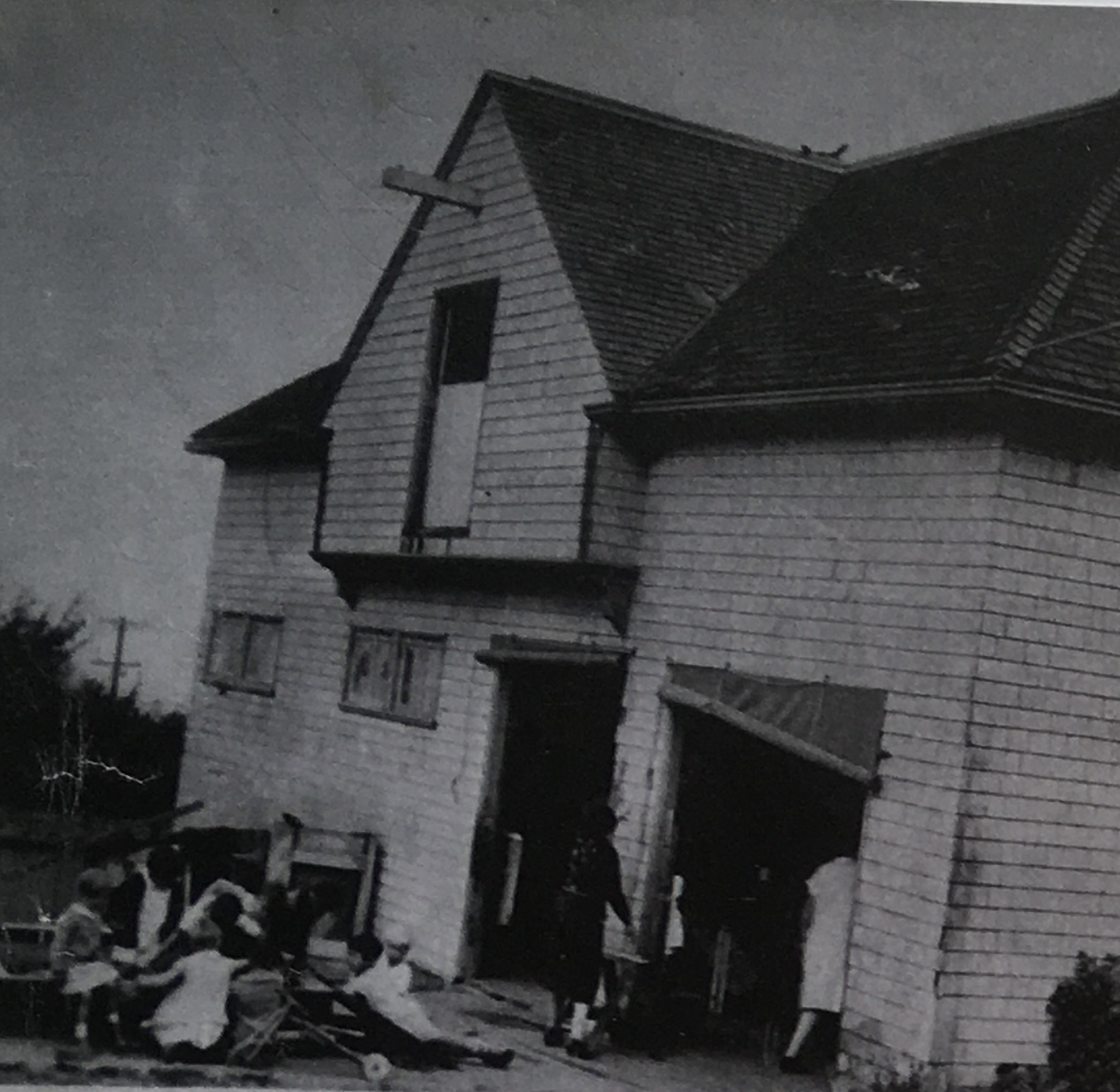
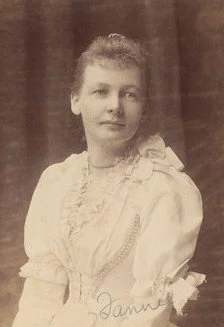
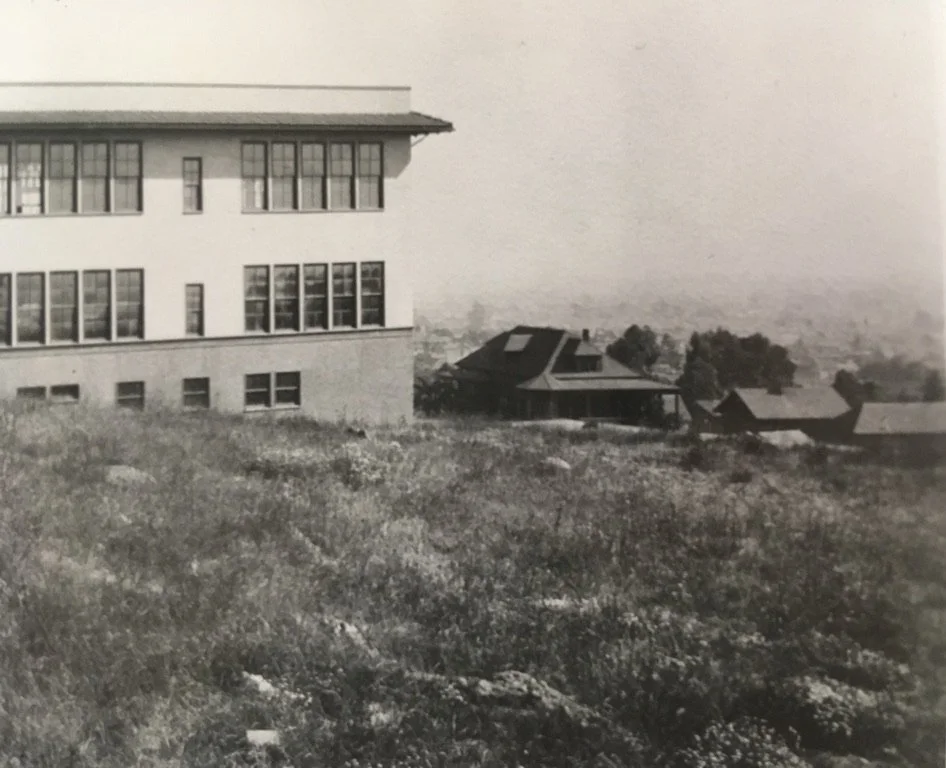
Operating expenses and equipment costs would be met from the mothers' own limited resources. After three months of discouraging searches for suitable facilities, they discovered a dilapidated, long-unused farmhouse: Miss Fannie McLean’s property at 1140 Walnut Street. The half-acre yard, wide porch, and roomy barn provided the spacious environment they sought at an affordable rent.
Initial renovation and equipment expenses were covered by a $15 registration fee per child. The mothers and fathers performed much of the labor themselves: cleaning, scrubbing, painting, gardening, carpentry, and even cement work. While every mother contributed, a small core group carried the heaviest workload, as typically occurs in such enterprises.
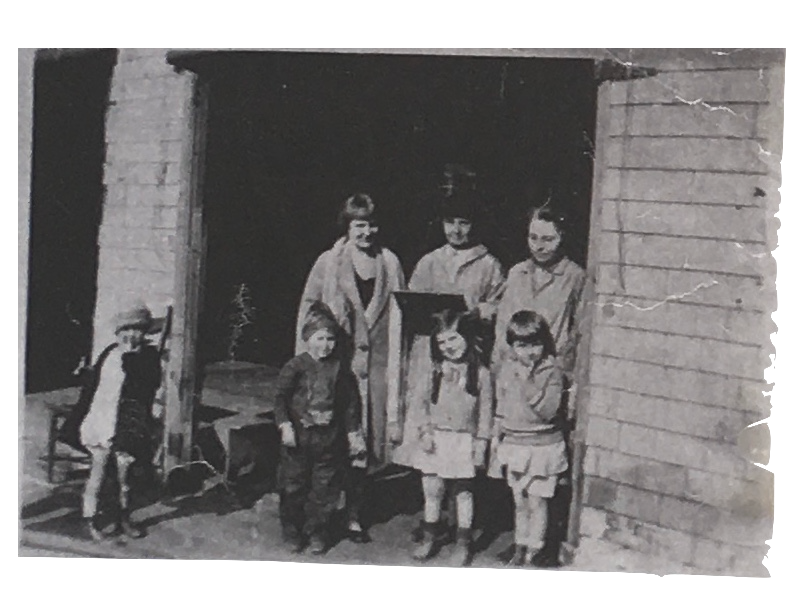
Photos: the farmhouse barn and school site. 1927
The First Year
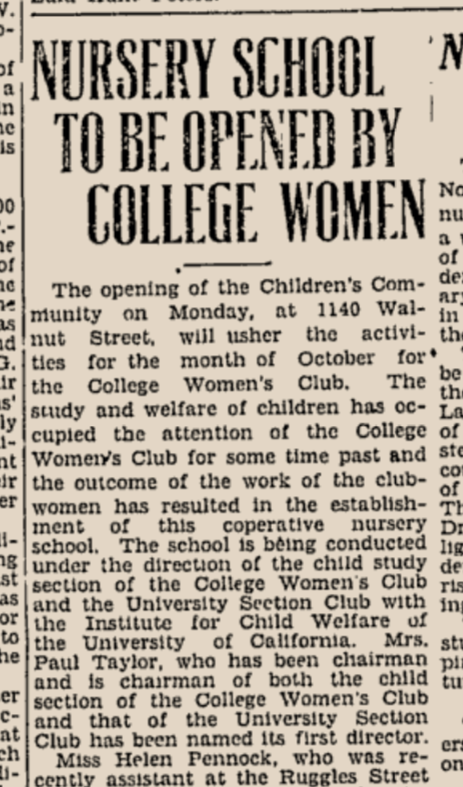
The Children's Community opened on October 3, 1927, with an original staff consisting of a trained supervisor (Miss Helen Pennock of the Boston Nursery Training School), a director, a cook, and a college student who served as janitor in exchange for room. Twenty-five children aged two to six were enrolled, with twenty mothers each contributing one full day per week from nine to four, assisting the supervisor, director, and cook in rotation.
Despite careful planning by committees and group discussions, the initial implementation revealed significant problems. The mothers had limited information about organizing cooperative schools, and their supervisor's experience was with non-cooperative institutions. The gravest mistake was allowing all mothers to begin cooperating before routines were established or children had adjusted. Various mothers attempted to immediately introduce their particular interests rather than allowing them to develop through children's natural activities.
After two chaotic weeks, differences in educational philosophy were addressed at a crucial meeting. With advisers' help, the mothers developed more workable plans and simplified the daily program to approximately its enduring form. Some participants withdrew, but those who remained demonstrated greater loyalty and enthusiasm, having participated in resolving the challenges. This experience established a spirit of mutual tolerance, willingness to experiment, and disinterested dedication to the common good that became the school's defining characteristic.
Additional financial support from the Institute enabled the hiring of a mother-supervisor for the older group and a full-time janitor. Although mothers' required time was reduced from a full day to half-day, twelve mothers chose to spend one consecutive week per month at the school, providing greater continuity and more intensive mother education.
Financial regulations underwent extensive experimentation throughout the first year. Initially, no substitute fees were charged for missed service days, mothers unable to provide service paid only an additional $2.50 monthly beyond the regular $12.50 tuition, and refunds were given for children's absences. Based on several months' experience and growing financial responsibility, mothers voted to implement a two-dollar substitute fee for missed service days regardless of cause and abolished absence refunds.
Mother education proved highly effective, with behavior chart maintenance promoting objectivity. Under trained supervision, several mothers became proficient educators.
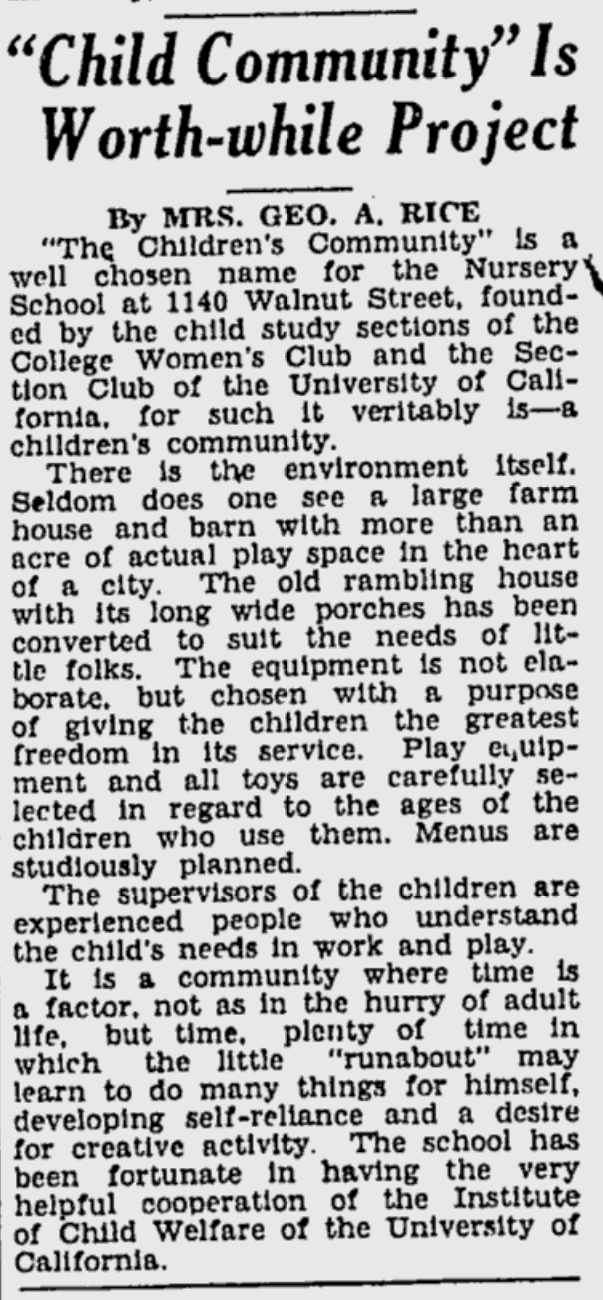
Photo: (top) first teachers. Left to right: Katharine Whiteside Taylor - Parent and Director, Irene Walsh Birge - Parent and Teacher Assistant, and Helen Pennock - Supervisor. 1927 (side) School opening newspaper clipping form Berkeley Daily Gazette, Oct 1, 1927, page 4
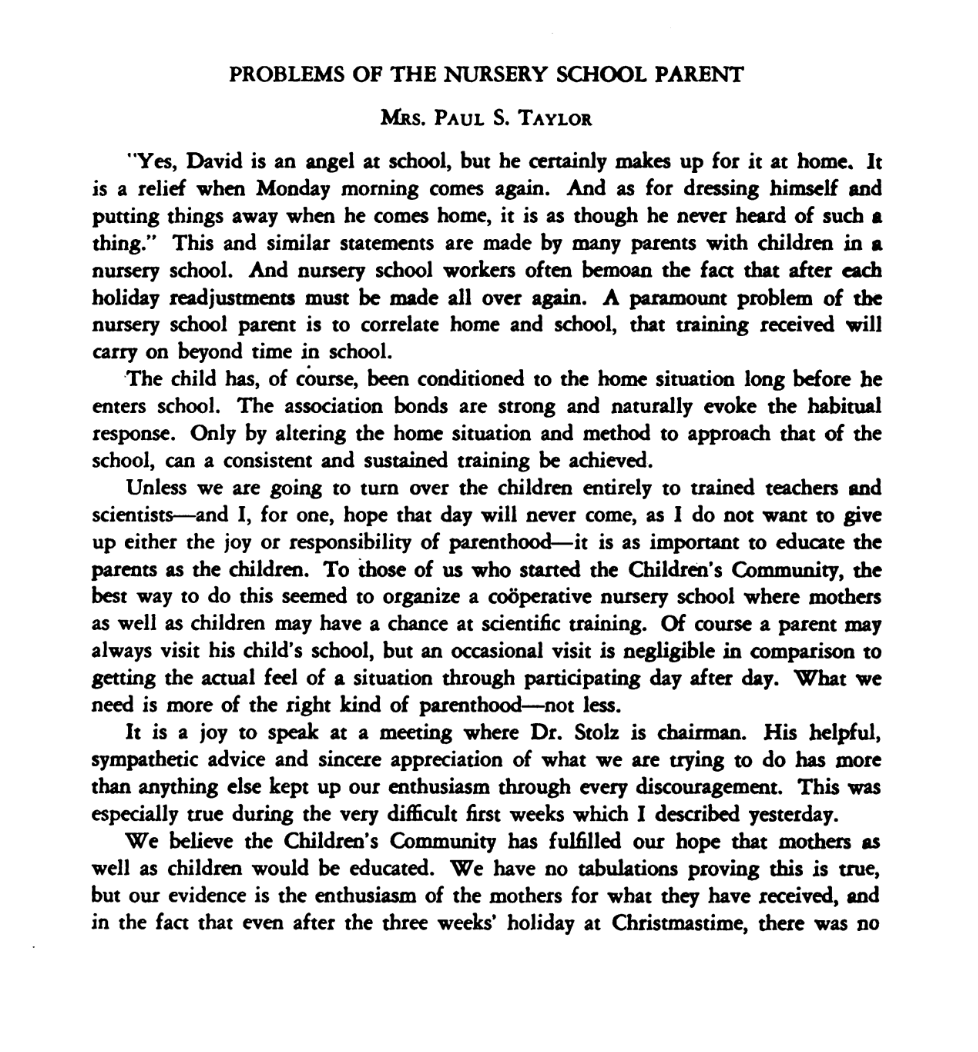
Artifact SpotlightKatherine Whiteside Taylor’s Account of the First Year
Taylor’s candid reflection reveals the unexpected challenges of CCC’s first year. She faced the harsh financial realities of cooperative membership, earning just 50 cents per hour while shouldering shared operational costs, and the constant tension balancing motherhood and maintaining their cooperative duties. She also navigated tensions with other families as some parents used the school merely as a "parking place" for their children, leaving just 12 out of 26 families participating, creating resentment among those shouldering the full burden. Her account captures the honest challenges of these early days.
Second and Third Years
The second year began with only those children and mothers who had been in the school before, ensuring smooth operation from the first week and making the adjustment of new children and mothers comparatively easy.
The school reorganized to a half-day schedule (9 am to 1 pm), as mothers preferred having more afternoon time with their children and felt this created better home-school balance. Luncheon was retained for its social and dietary benefits, while mothers needing full-time care arranged among themselves for afternoon attendants.
Successful innovations included bus service conducted by a university student and a library service built from books owned by mothers .
Mother education expanded significantly during the second year. New mothers were required to observe for two days before assisting, with daily routines and policies explained by the director. Improved organization and increasing numbers of proficient mothers allowed the return to the original one-day-per-week service schedule. Posted charts displayed mothers' service days, routine positions, children's self-care capabilities, and dinner service suggestions.
By the third year, enrollment reached thirty-six children. Unused portions of the building and yard were reclaimed to accommodate expansion. A mother with kindergarten training and progressive school experience became supervisor of the kindergarten group, while a father served as auditor. Dr. McFarlane, who conducted a behavior clinic at the Institute, arranged special monthly hours for the Children's Community. Mother education advanced further under a chairman of parent education, with an improved introductory observation plan. Parent education classes from Berkeley and Oakland received privileges to observe at the Children's Community.
School life: Physical Environment
Visitors consistently noted three impressive features: abundant space, naturalness and informality, and evident happiness of both children and mothers. The simplicity of renovation and equipment, necessitated by limited budgets, proved valuable in creating a homelike atmosphere while controlling costs. Rather than expensive juvenile fixtures common in nursery schools, the Community used bathroom adaptations similar to those in homes. "Lockers" and chairs were constructed by the children themselves from orange boxes, while bright curtains, tables, and posters added warmth and color.
The youngest group enjoyed ample play space in a front yard and long side porch providing shelter during inclement weather. A large wooden platform built by two fathers enabled block-building for the intermediate group in the backyard as well as the front porch. This tradition of young kids in the front yard and older kids in the back yard is still carried through today at CCC.
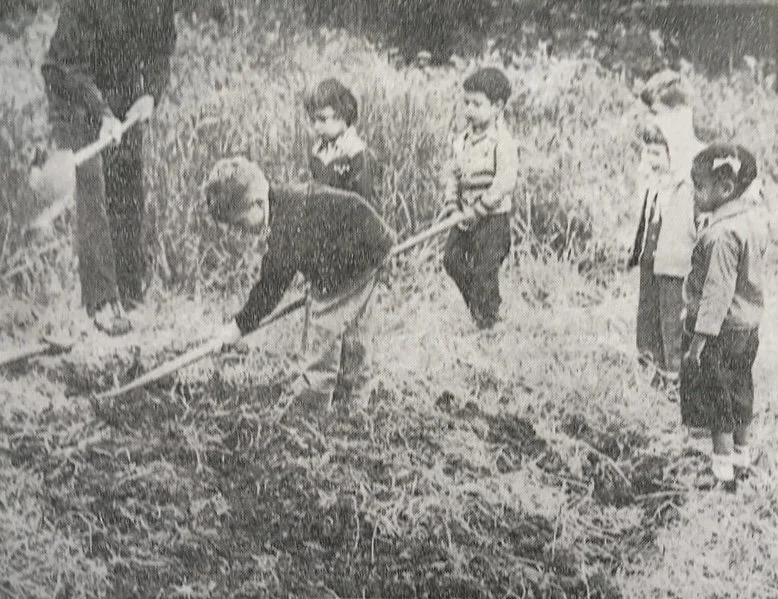
A spacious, warm, dry basement furnished by the furnace served as an excellent workshop and rainy-day refuge. Parents actively beautified the grounds by planting Bermuda grass and setting out shrubs. Children planted and tended small garden plots. The yards contained pet houses, swings, slides, ladders, sandboxes, and ever-changing box villages. An abandoned horse car, used as airplane, boat, or train, proved particularly popular. The Community abundantly provided materials fostering imagination and ingenuity: blocks, clay, paint, hammer and nails, sand and water, dolls, and a "dress-up" box for rainy days.
School life: The Routine
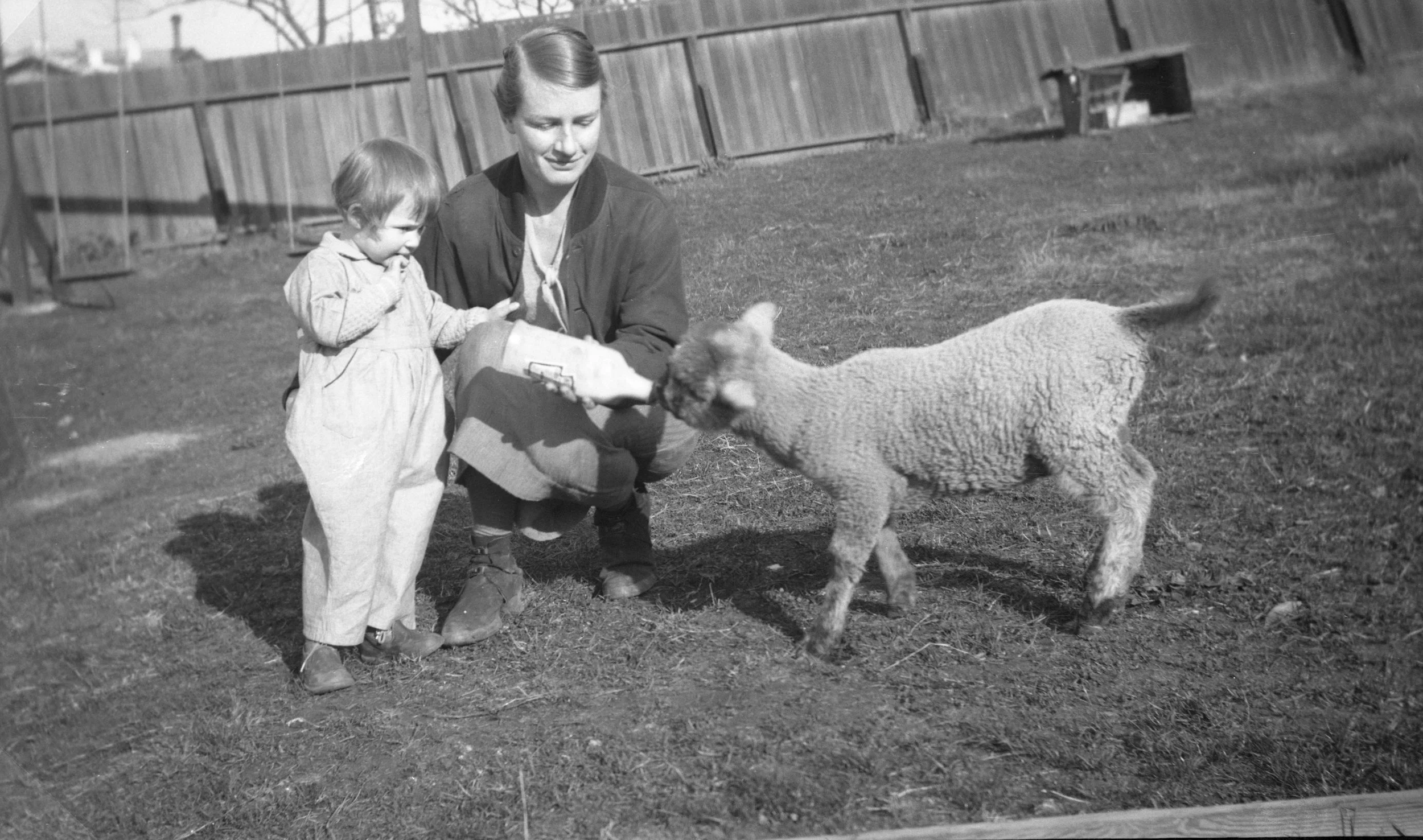
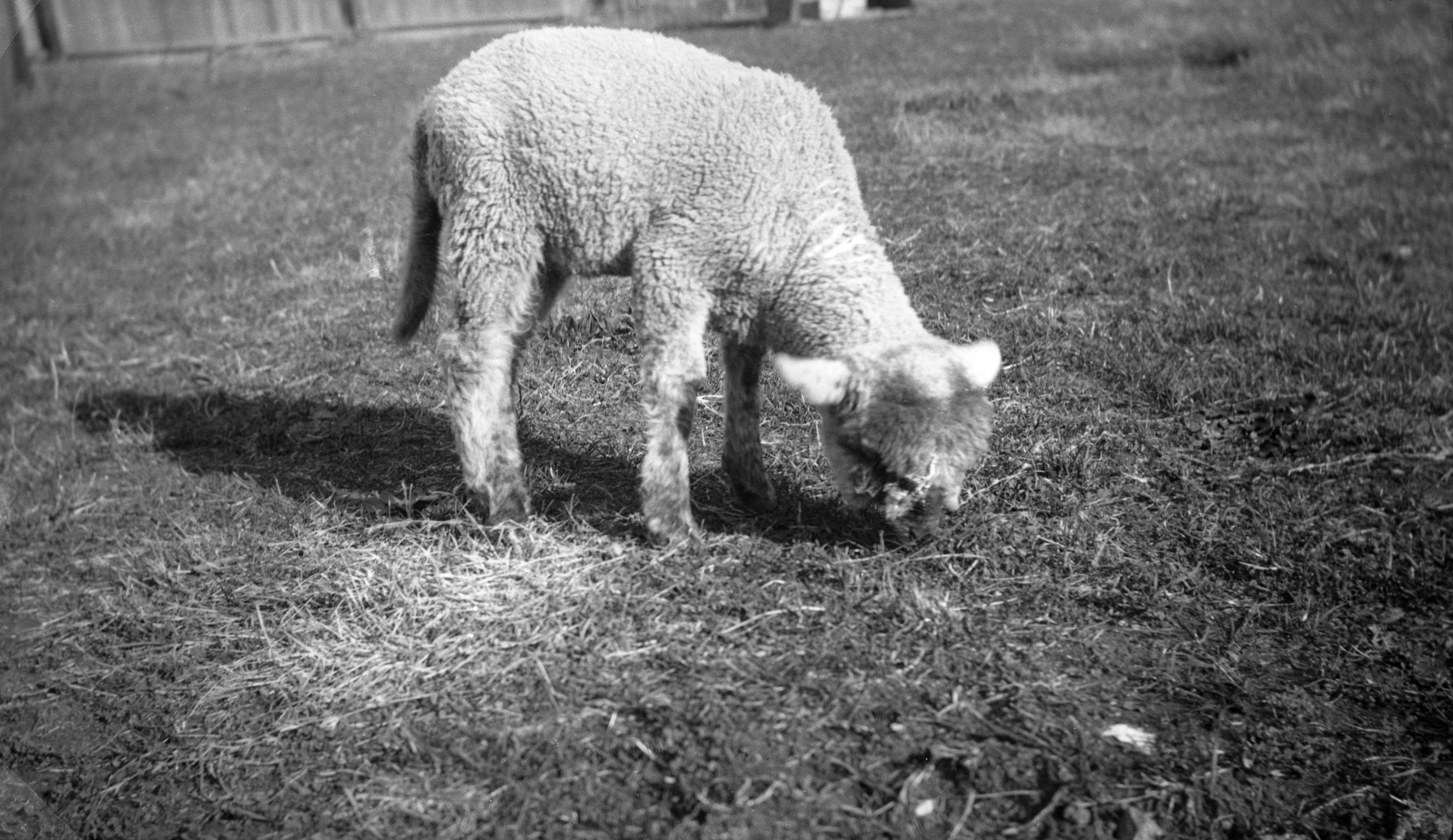
Biology professors and parent-biologists periodically brought various pets including water-dogs, tadpoles, frogs, snakes, beetles, white mice, guinea pigs, rabbits, and turtles. Children were encouraged to use initiative and make constructive use of skillfully presented materials.
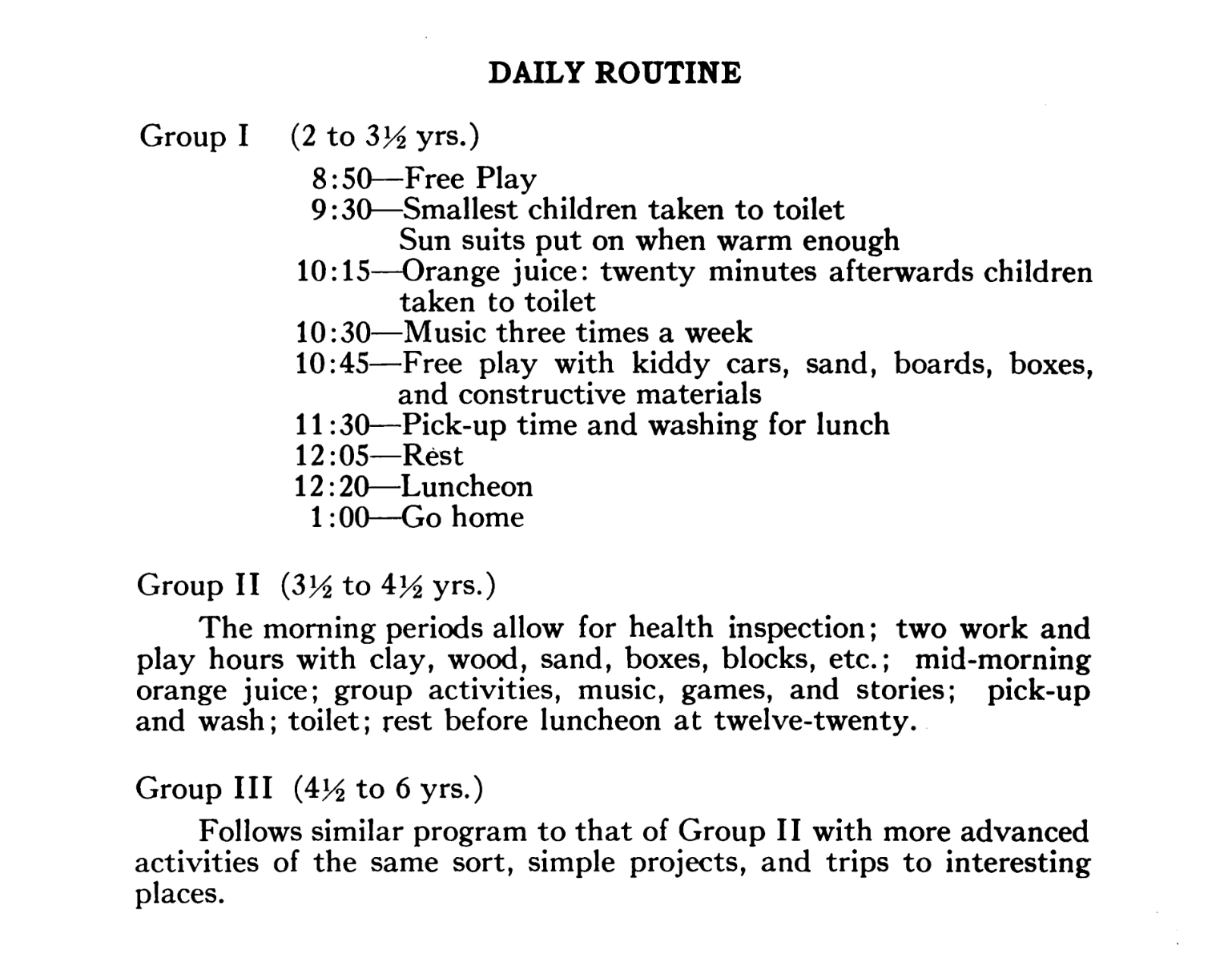
While most time was devoted to free play, structured periods included health inspection, rhythmics and music, orange juice service, rest, lunch, and naps for younger children. Personal habit training occurred naturally. Before rest periods and orange juice service, children were sent to the toilet and washroom. Mid-morning orange juice and noon luncheon provided opportunities for developing good social habits through group example.
All children helped put toys away, and occasional turns at washing glasses, setting tables, or sweeping floors were enjoyed. The social education children provided each other was carefully fostered. Children pursued their play in an industrious but happy and leisurely manner with minimal adult interference.
The Great Depression
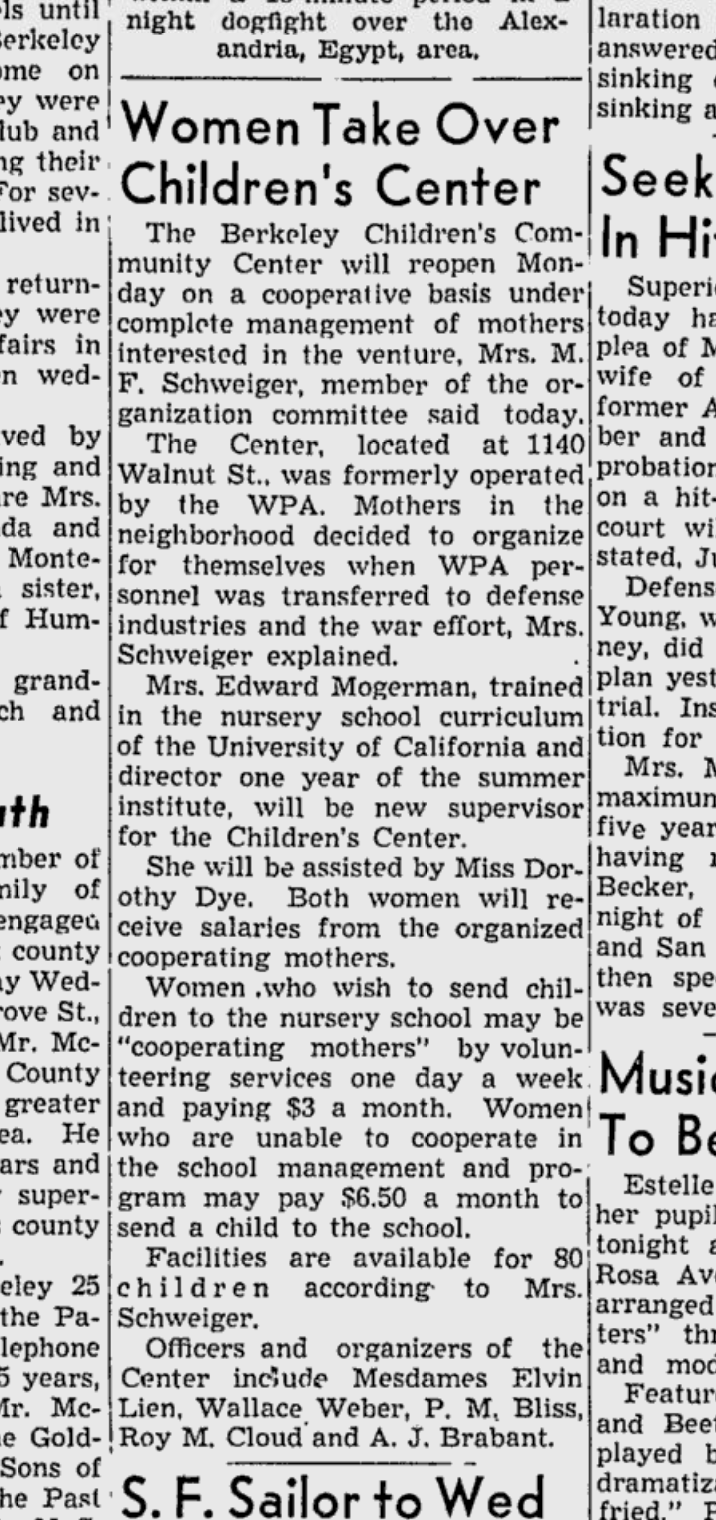
By the end of 1936, however, no more outside assistance was available and it looked as though the school would have to close. Two interested mothers who had been in the group prevailed upon the Works Progress Administration (WPA) fund the school. The WPA paid the teachers’ salaries and gave a small amount toward maintenance and supplies.
As many as 80 children were enrolled, and about seven supervisors were provided. During this period, the school was not a cooperative, except for the regular parent education meeting held under the general supervision of the Berkeley Board of Education.
When notice came in 1941 that WPA funds would soon end, the mothers made the crucial decision to incorporate as a cooperative nursery school. With advice from Professor Max Radin and attorney James A. Johnstone, they drew up articles of incorporation.
Artifact Spotlight
1951 Maintenance Report
This excerpt of Children’s Community Center’s Maintenance Progress Report shows the kind of work fathers tackled: painting trim, fixing locks, building seats on the children’s wooden train, hauling away weeds and trash, and improving the play yard soil.
This ledger highlights the role of men at CCC in the 1950s—an aspect rarely documented. Katherine Whiteside Taylor’s Parent Cooperative Nursery Schools (1954) dedicates just one page to fathers’ participation in the Cooperative Nursery Movement.
As early as the 1950s, some fathers occasionally took their wives’ classroom days. More often, they supported the school through tasks considered “traditional male roles” for the era. At CCC, fathers were expected to dedicate one evening or Saturday each month to repairs, improvements, or other services. Their contributions ranged from repairing play equipment and doing yard work to offering skills in carpentry, fundraising, or publicity writing.
1951-80
The Modern School
The Search of a New Space
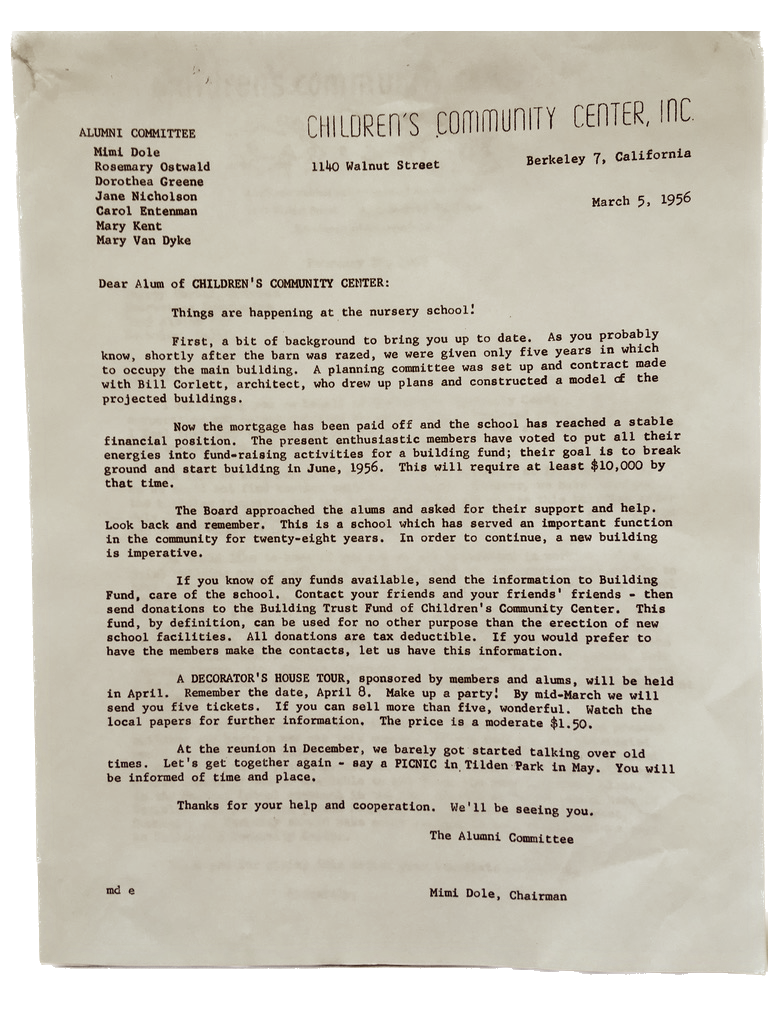
A significant milestone occurred in 1951 when Miss McLean's death. The school purchased the 1140 Walnut Street property from her estate at a reasonable price. Fund-raising events and private donations provided the necessary funds, with the Bank of America's Berkeley Main Office handling the mortgage.
However, approximately a year later, the three-story farmhouse that had served as a Berkeley landmark was condemned by the Fire Department as unsuitable for school use. The department granted a five-year extension with the strict condition that no alterations or improvements could be made to the property.
The membership threw themselves wholeheartedly into intensive fund-raising efforts to build a new school. They solicited contributions from current members, alumni, the broader community, and various grants and foundations.
In May 1957, the Fire Department issued final evacuation notice for 1140 Walnut Street with no possibility of further extensions.
During summer 1957, they leased the nursery center at Garfield Junior High from the Board of Education. By September 1957, finding suitable Berkeley housing that met all regulatory requirements proved so difficult that discontinuation again seemed necessary. However, the Berkeley Coventry Church at Hopkins and Carlotta generously offered their primary rooms and yard for the four-year-old group, while the City of Berkeley allowed use of Totland Park at Virginia and McGee for three-year-olds.At the end of the school year in June 1958, the Church could no longer provide space, forcing both age groups to combine at Totland Park under one teacher with enrollment cut in half.
Despite these unprecedented challenges, including facility limitations, teaching staff changes, and constant uncertainty. the group maintained cohesion, sustained full enrollment with a growing waiting list, balanced the budget, conducted successful fund-raising events (wine tasting party and house tour), held monthly parent education meetings that attracted participants from other schools and the public, and continued delivering what they considered a worthwhile nursery school program.
The design
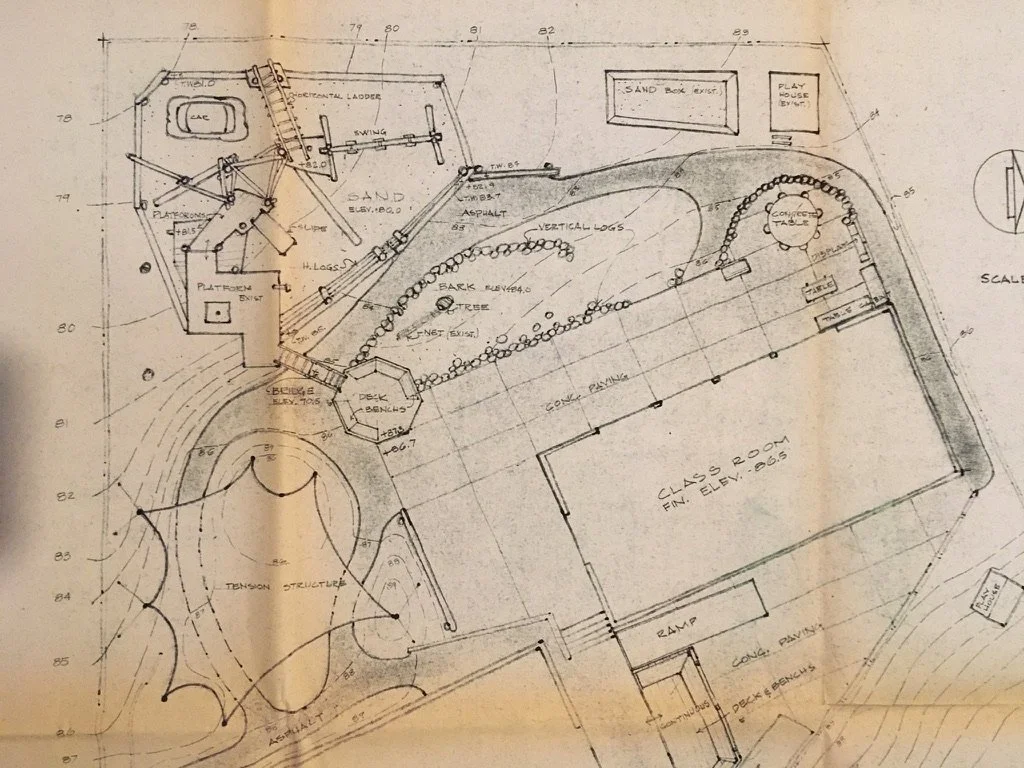
In the meantime, plans were drawn up for the new building.
Mr. Richard Kehres, the architect, not only had experience in designing other schools, but being a member of the school, he has had an opportunity to work closely with the school as a father and in that way gained a better understanding of the problems and needs of a cooperative nursery school, and how a building should function to meet these needs.
Construction was begun in August 1958. By the following January, the building was completed.
Enrollment was increased, another teacher was employed, and CCC began its 32nd year of cooperative nursery school education in a building designed specifically to provide a well-planned and happy atmosphere for active and creative play, and to comply with regulations of the State Fire Marshall and the State Department of Social Welfare.
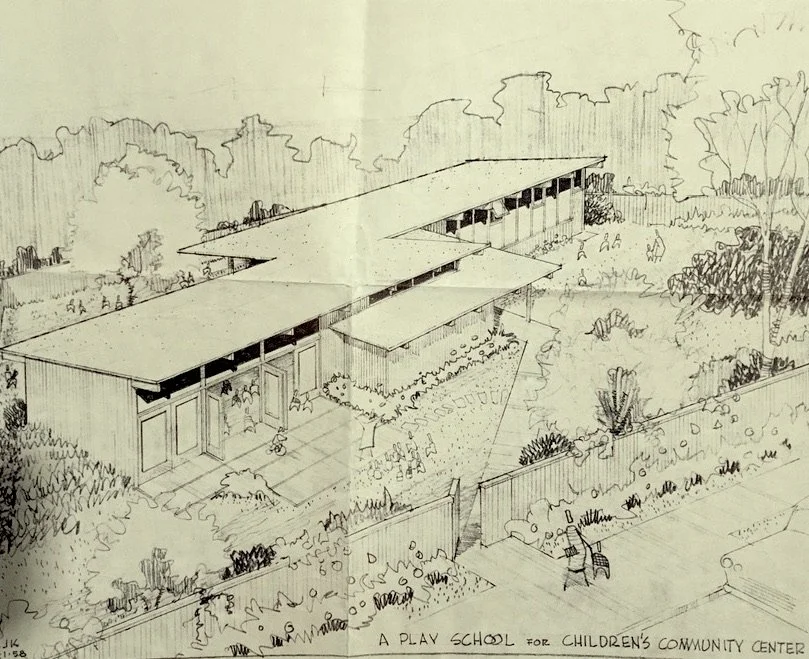
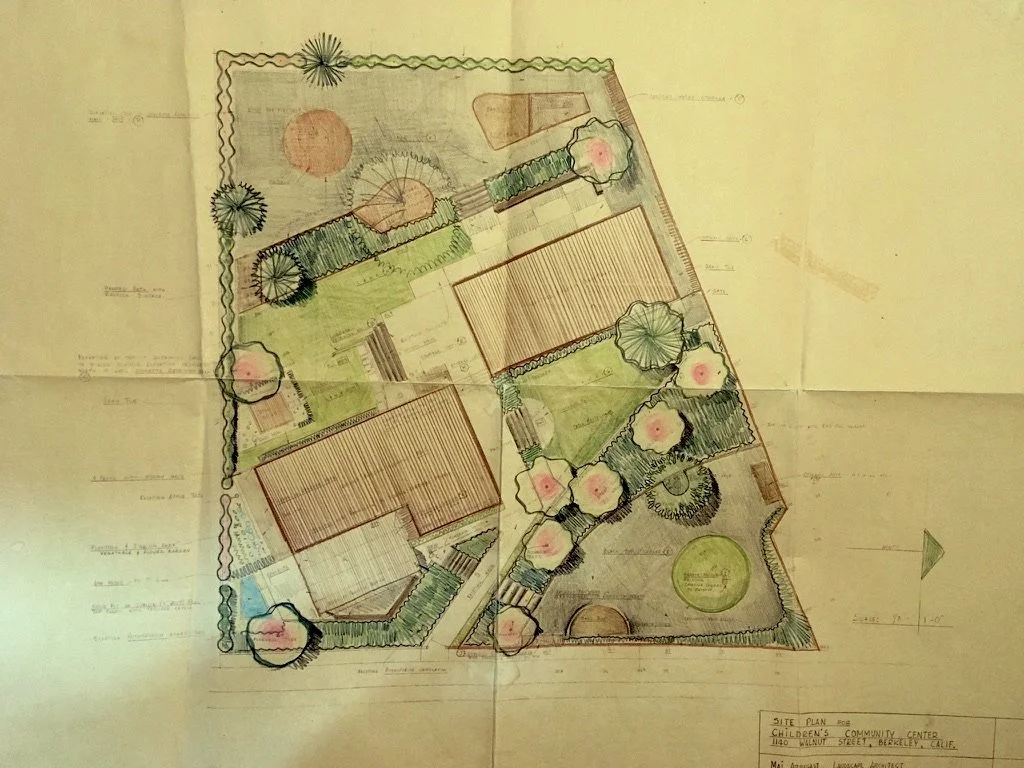
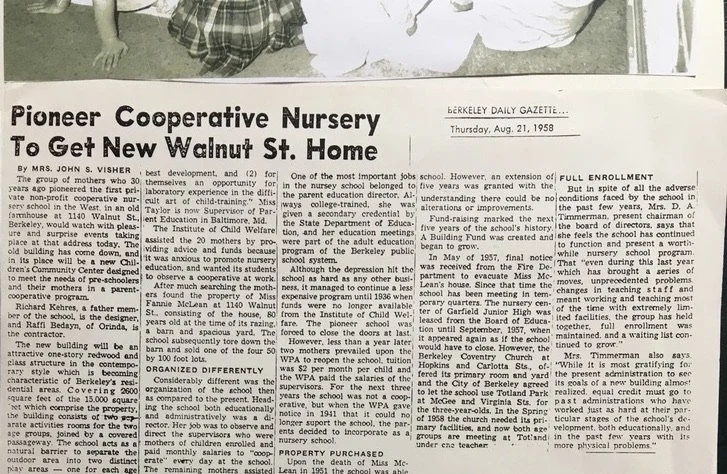
Grand Opening - 1958
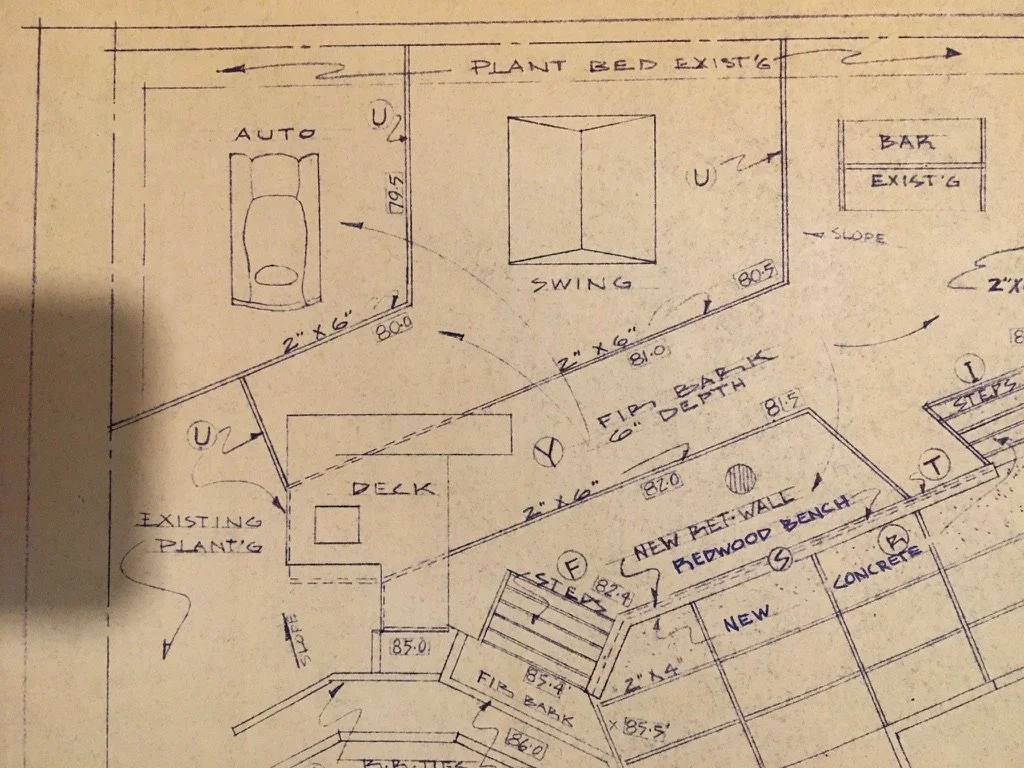
In the meantime, plans were drawn up for the new building by an architect/father and construction was begun in the fall of 1958. By the following January, the building was completed. Enrollment was increased, another teacher was employed, and CCC began its 32nd year of cooperative nursery school education in a building designed specifically to provide a well-planned and happy atmosphere for active and creative play, and to comply with regulations of the State Fire Marshall and the State Department of Social Welfare.
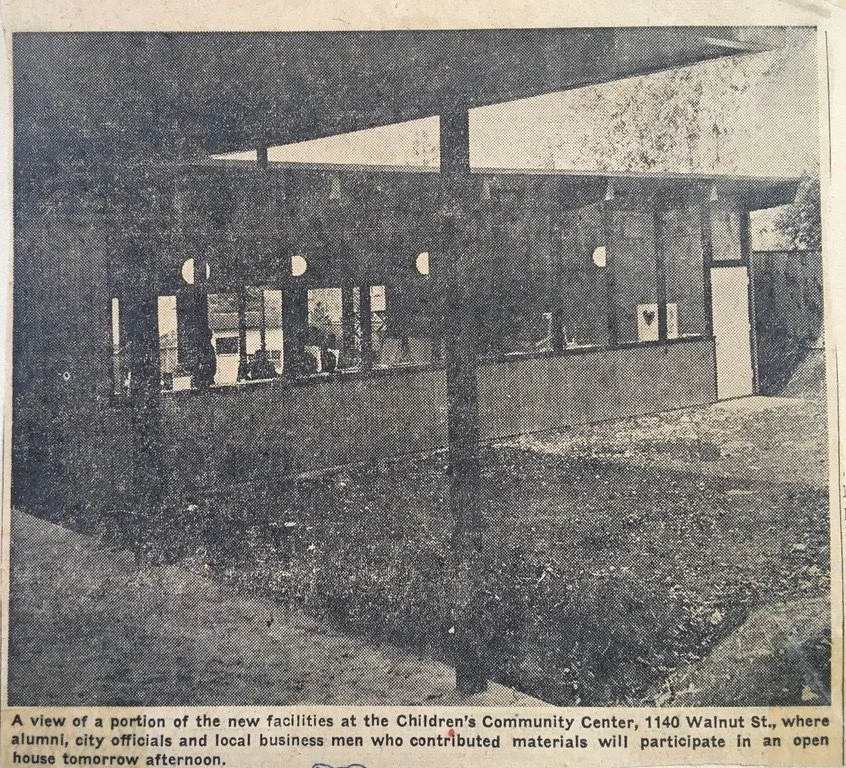
1980-Present
A Living Legacy
CCC at 60
In 1987, as the Children's Community Center celebrated its 60th anniversary, the cooperative school had evolved far beyond its founders' original vision while maintaining their core principles. The school that began with twenty mothers in a dilapidated farmhouse was now recognized as the oldest continuously operating cooperative preschool in America.
The anniversary celebration brought a special visitor who embodied the living link between the school's pioneering past and its thriving present: Katharine Whiteside Taylor, now 90 years old, returned to the institution she had helped nurture in its crucial early years. No longer the young director of a fledgling cooperative, Taylor had spent six decades becoming the nation's foremost authority on parent cooperative education.
Through her consulting work and newsletter, she had helped establish hundreds of similar programs, but Children's Community Center remains the special place where the movement had begun.
Photos: Katharine Whiteside Taylor visits to CCC (circa: 1987-88)

Fight to Protect Tax Exemption for Co-Ops
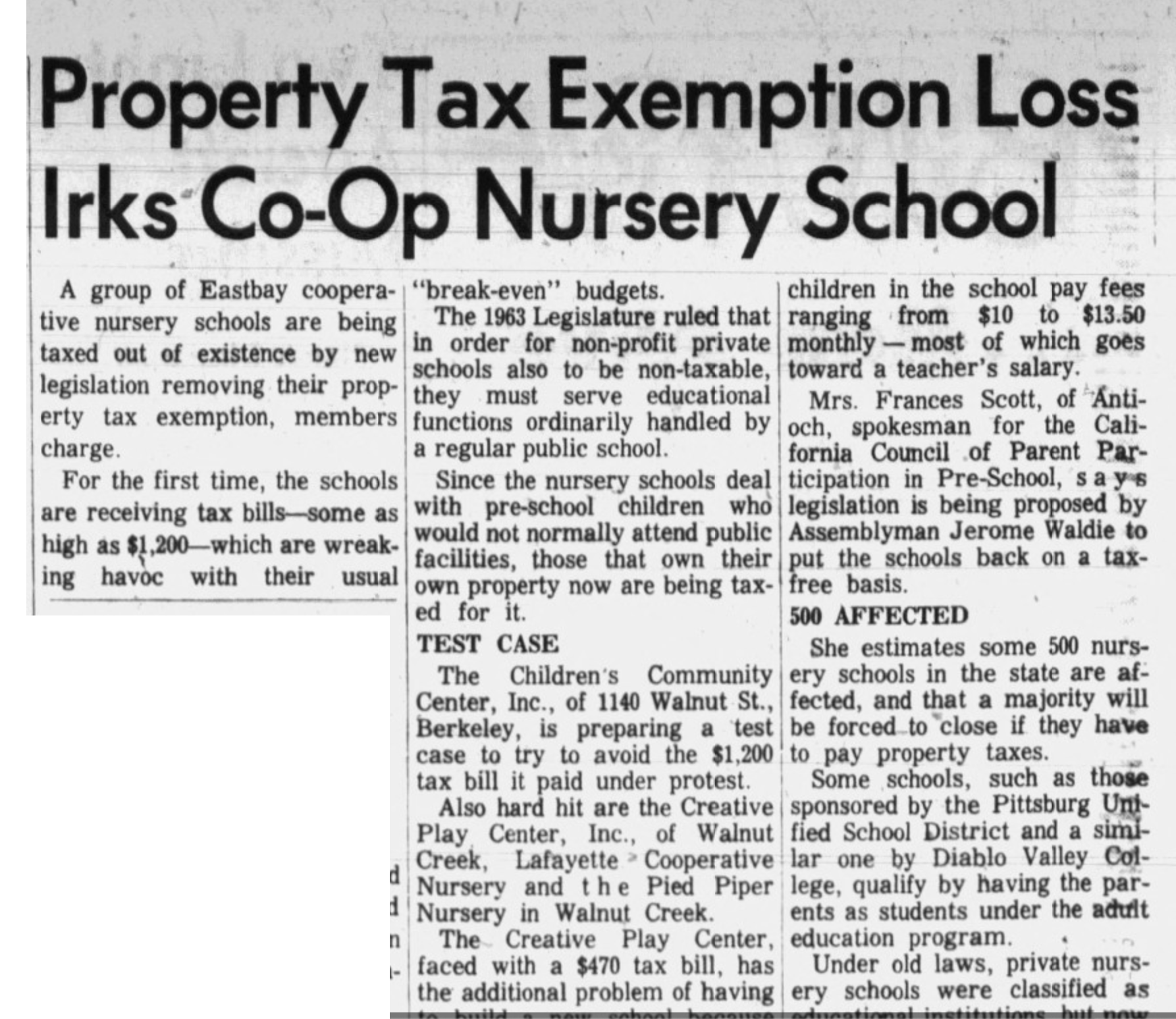
The school was self-supporting until the State Legislature passed a taxation end revenue bill which inadvertently, by its wording, removed non-profit cooperative nursery schools from their tax-exempt status, with its valuable property and building, CCC suffered severely from a huge tax bill.
For three years the school paid the taxes while simultaneously employing a lawyer to fight to re-instate the tex-exempt status, By the end of 1965, we were successful and were able to enjoy reasonable expenses again. In an effort to raise money for the taxes, a third session for four-year olds use started in the afternoon. The program met with such success and filled such a definite need in the community that it was continued even after the tax crisis
An Enduring Feat
Dorothy Hewes book ‘It’s the Cameraderie’. A History of Parent Cooperative Preschools’ published by the Center for Cooperatives, University of California, 1998 (ISBN: 1885641230). Here are excerpts from chapter 2: “formative decades of cooperative nursery schools” wherein Hewes describes CCC and an offshoot school:
“The California Council of Parent Participation Nursery Schools convention theme for 1977 was ‘Parents and Children Working Together: 50 Years of Co-op in California’ in recognition of Children’s Community, which had ‘weathered many changes, obstacles, and controversies over the years, but somehow managed to survive, expanding and contracting, as the needs of the community change’. This longevity can be attributed to the flexibility and hard work of the parents and staff. The school accepted WPA sponsorship during the depression, conducted a successful fund-raising to build a new school when the fire marshal condemned the old one, and constructed a child-oriented outdoor environment from scavenged materials. They wrote a proposal in 1966 to integrate more ethnic minority families and to actively explore interpersonal relationships. They scheduled extended hours in 1967 to accommodate working mothers.
Parents were willing and able to fight for their beliefs and felt reinforced if they shared expertise with other co-ops. For example, after Governor Brown instituted an economy measure in 1975 that closed down the California inspection and licensing system, Children’s Community was one of the petitioners in the class action lawsuit that reinstituted the earlier requirements. When there was a question about state taxes on property owned by non-profit schools, their pro bono attorney got a ‘landmark decision’ and director Elsie Gee wrote a brochure that became a model for other California schools.
2027+
The Next Chaper
Nearly a century after its founding, the Children's Community Center continues to thrive as a testament to the enduring vision of those original twenty mothers.
CCC maintains the foundational principles established in 1927 while adapting to contemporary educational understanding and community needs. Nearly a century later, CCC stands as living proof that innovations born of parent initiative, sustained through cooperation, and grounded in respect for children can not only endure but thrive across generations.
The cooperative model that emerged from those early struggles has proven remarkably durable. Modern CCC families continue the tradition of active parent participation, sharing in the daily operations, educational decision-making, and community building that defines cooperative nursery education. The original idea of placing younger children in the front yard and older children in the back yard remains a defining characteristic of CCC today, demonstrating one of countless unbroken lineages across the school’s 100 year history.
Continuous evolution
The school's commitment to child-directed learning reflects the progressive educational philosophy that distinguished the Children's Community from conventional nursery schools of the 1920s. These approaches, considered experimental then, are now recognized as developmentally appropriate practices that support children's holistic growth.
Today's CCC has evolved to embrace values of environmental sustainability, inclusion, and social justice that reflect a broader understanding of equity in early childhood education. CCC is again on the forefront of childhood education by aligning our efforts to address bias and discrimination at the earliest ages.
As CCC looks toward its second century, the school faces opportunities to further evolve while honoring its foundational principles. The challenges that motivated the original twenty mothers—urban isolation and limited community connections for families — remain relevant for contemporary parents navigating complex modern life.
Add your story
We welcome any additional information (memories, photos, etc.) regarding the history of the school. If you are an alumnus, or if you can provide some insight to the past, please contact us!
Sources and further reading
The Children's Community, Berkeley, California
Katharine Whiteside Taylor (1931)
Available to read on the HathiTrustIt’s the Cameraderie’. A History of Parent Cooperative Preschools’
Hewes, Dorothy W. Center for Cooperatives, University of California, 1998.